-
5
Feb
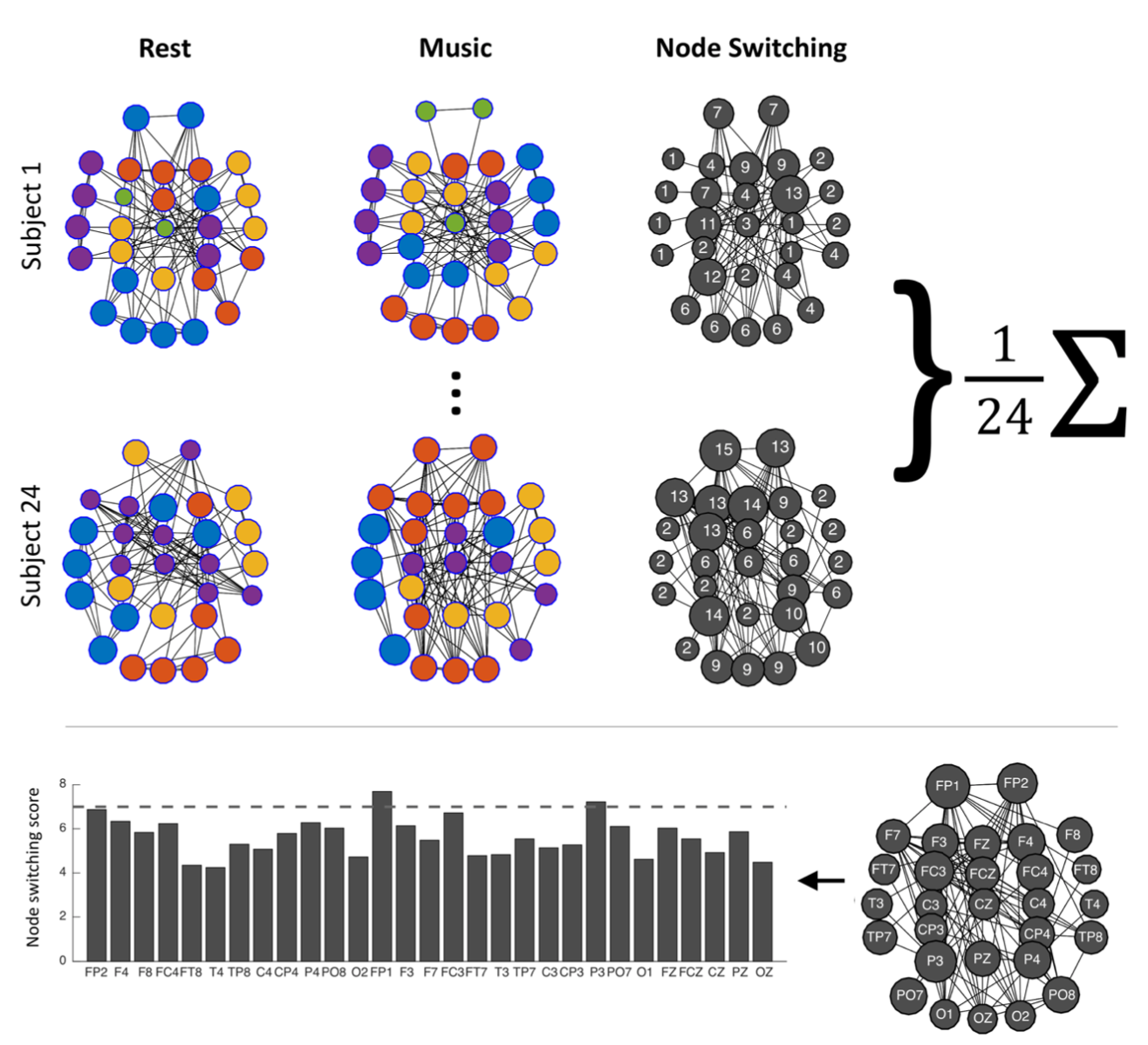
A new study reports for the first time functional interactions among brain rhythms in music perception using a novel, elegant, multiplex-aware approach based on a community detection algorithm.

A new study reports for the first time functional interactions among brain rhythms in music perception using a novel, elegant, multiplex-aware approach based on a community detection algorithm.
Research in Encoding and Decoding of Neural Ensembles
The AREADNE conferences bring scientific leaders from around the world to present their recent findings on the functioning of neuronal ensembles in an informal yet spectacular setting on Santorini.
The conference series emphasizes interaction with a size and pace that encourages in-depth discussion. Interested researchers are strongly encouraged to submit an abstract for poster presentation as attendance is strictly limited, and the conference typically sells out.
Abstract submission deadline is 7 March 2014.
Send us your best work!
John Pezaris, Co-Chair
AREADNE 2014
Read the rest of this entry…
Nengo is a new graphical and scripting based software package for simulating large-scale neural systems.
A group of US researchers has produced a robotic set of legs which they believe is the first to fully model walking in a biologically accurate manner.
| M | T | W | T | F | S | S |
|---|---|---|---|---|---|---|
| « Jan | ||||||
| 1 | 2 | 3 | 4 | 5 | ||
| 6 | 7 | 8 | 9 | 10 | 11 | 12 |
| 13 | 14 | 15 | 16 | 17 | 18 | 19 |
| 20 | 21 | 22 | 23 | 24 | 25 | 26 |
| 27 | 28 | 29 | 30 | 31 | ||


Exoskeleton Retinal prosthesis human to human interface Connectomics Graph Theory neuroethics tCS CPG Biometrics Plasticity Trajectories systems-neuroscience music recommendation music neuroscience Deep Learning Interpretability Learnable Filters network neuroscience multiplexing Conferences music perception brain networks modularity community detection brain to brain interface transcranial direct current stimulation music Sparse neurons Noise Deep Brain Stimulation LFP Neural coding TMS Computational Neuroscience Brain-inspired Computing Neuroimaging Wavelets Neuro-inspired Computing neuroprosthetics Bionics Machine Learning neural recordings EEG Information Theory Dimensionality Reduction Modelling Neural Networks Clustering Statistical Analysis Neurophysiology Spike Sorting Brain Research Brain Interfaces
WP Cumulus Flash tag cloud by Roy Tanck requires Flash Player 9 or better.
 IEEE Spectrum Biomedical
 Neurobot via RSS